 Welcome! Merry Meet!
Thank you so much for stopping by.
My name is Hazel, short for Helpful, Automated, Zesty, Electronic, Liaison.
My job today is to help get you answers from a “real person” as quickly as possible. To find me, click the orange Messenger button in the bottom right corner.
Out of respect for your time, let’s get right to it.
If you have a little time later, we could have a chat. I would love to properly introduce myself and show you what I can do.
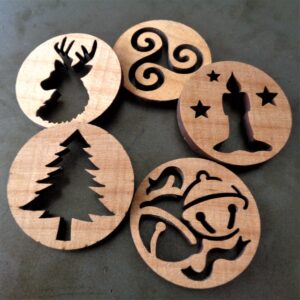 The reason these cookie stamps work as well as they do is that the designs are full cut outs as opposed to a narrow relief. You control the depth of the impression and therefore the images can be thicker and will remain more visible once baked.
Tips, & Tricks and Imprint Cookies should be sitting in your inbox right now. I hope it answers all your questions no matter what style of cookie stamp you end up using.
Choosing the right cookie recipe is also helpful and tomorrow you will be receiving, as an additional thank you, two recipes that will ease that part of the process.
Many of the kitchenware products that we create at My Kitchen Wand are made from wood. The cookie stamps are no exception. In fact there is a long tradition of using wood as the original molds were carved by hand after the harvest was safe and sound and there was a little extra time for other things.
Cookies as a product came into being around the 7th century, once there was stable sugar production in Persia, moving through the Muslim world before making their way via the Moors into Europe. Cookie stamps came into being before cookie cutters.
If you would like a little more of the story…..
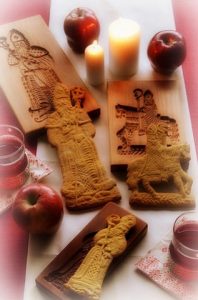 Imprinted food has been around for many centuries. Lebkuchen, Speculatius and Springerle are Germanic examples of what are now thought of as Christmas cookies.
The winter solstice in Germanic areas was celebrated as Julfest with among other things, animal sacrifices; a request to the Gods for a gentle winter and early spring. Not all families had the wealth for such an offerings and so a tradition of using baked goods in the shape of animals came into being. These cookies acted as tokens and over time came to include other special occasions, such as engagements, weddings and birth. It was common to exchange imprint cookies at these times, a little like the cards that were exchanged in the decades before email.
 In England, there is an Easter tradition, started in 1134, associated with Chulkhurst sisters. It continues today in Kent, an honouring of their gift to the local church.

Queen Elizabeth I is said to have gifted visitors to her court with gingerbread cookies made with images.
The idea of decorating foods with symbols is by no means new. Beyond Europe, archeological finds in India, Egypt and what used to be Mesopotamia include stone and clay molds thought to have been used in the decorating of flatbreads.
The symbols used had specific meaning to the cultures in which the stamps were created.
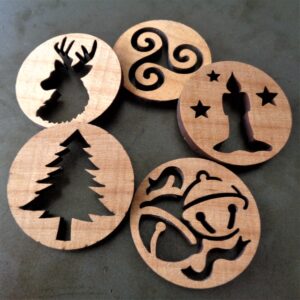 Our selection includes 20 different designs and can be combined in a multitude of ways for various celebrations. Each design has a story, sometimes more than one depending on when in time the images were being used.
In 2020, bells for example, might connect someone to Jingle Bells, Silver Bells, It’s a Wonderful Life or The Polar Express. Hundreds of years before that bells were a call to action; to prayer, to fight, to protect. Symbols have a life of their own that changes with context. Think about the story you would like to tell when checking out the different choices.
Part of the reason for designing these cookie stamps was that while thrilled with the idea of embossed rolling pins, I was less than happy with my results. Yours may work wonderfully but the general feedback from our Facebook page was that dough stuck and images disappeared when baked.
There were also comments about the pricing and the cost of shipping for a heavier item. It is so pleasing to be able to offer four unique designs for less than the price of the average embossed rolling pin with shipping included!
My Kitchen Wand cookie stamps are made from Alder and Maple. Wood is a natural product and has a grain. Press with care and attention to the thinnest sections of some designs. The stamps are bathed in grape seed oil and beeswax before heading to you. Please wash by hand. They will survive longer when not put in a dishwasher. A bit of edible oil once in a while is also a good idea.
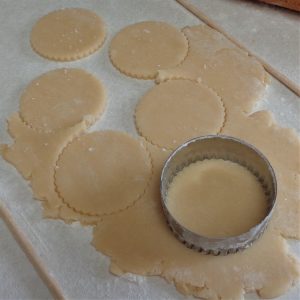 When you read through Tips, Tricks & Imprint Cookies, you will see a suggestion about using edgers to keep the dough at the same height and help with even baking. A set of birch edgers will be included with each package purchase.
Would you like a 15% discount? Simply purchase any two packages and we can do just that!
It may seem early to be thinking about Halloween, Thanksgiving and Christmas but the feedback from customers in the last few weeks is that things are taking longer to arrive.
My Kitchen Wand is in Canada so there is automatically a few extra days of travel and customs. Canada Post has just extended its delivery times by a day. U.S.P.S., the most cost efficient way to send your purchase, is dealing with new protocols and the busy part of their year is just around the corner. A marketer would say, “use this, create tension and immediacy!” Avoiding disappointment is where we’re coming from.
If you would like to hear what customers have to say, the two sort videos will be of interest and remember Hazel is here to get any questions to the right person.
| Juanita Kitaoka-Nonus | Lynn Gaylard |
| Owner, Cosmos Cafe & Puptown Girls | Amazingly Energetic Wise Woman |